Information on adjusting Outdoor Reset Curve
Note to homeowners: A heating system operating with Outdoor Rest (ODR) the radiation will not be as hot as they were with your old low or mid efficiency boiler.
Most controls allow you to adjust a minimum of 4 parameters The best way to determine water temperatures is having a room by room heat loss done to properly size the boiler and figuring a water temperature per zone. ODR adjustment and cycling is affected by oversized boilers and properly sized boilers are easier to set the proper ODR parameters.2. High outdoor air temperature
3. Low boiler water temperature
4. High boiler water temperature
5. Not all boilers offer a minimum Water Temperature parameter but if it is offered it is important to adjust with radiant heat or cast iron radiation.
All of these parameters are used to maximize operation, fuel savings, and home comfort. How do we know which one to adjust? It's really fairly simple. What happens usually is the ODR is disabled mainly due to the fact ODR is misunderstood. DO NOT JUST DISABLE IT, that's unfair to the homeowner. Let's take a look at the reasons to adjust each parameter.
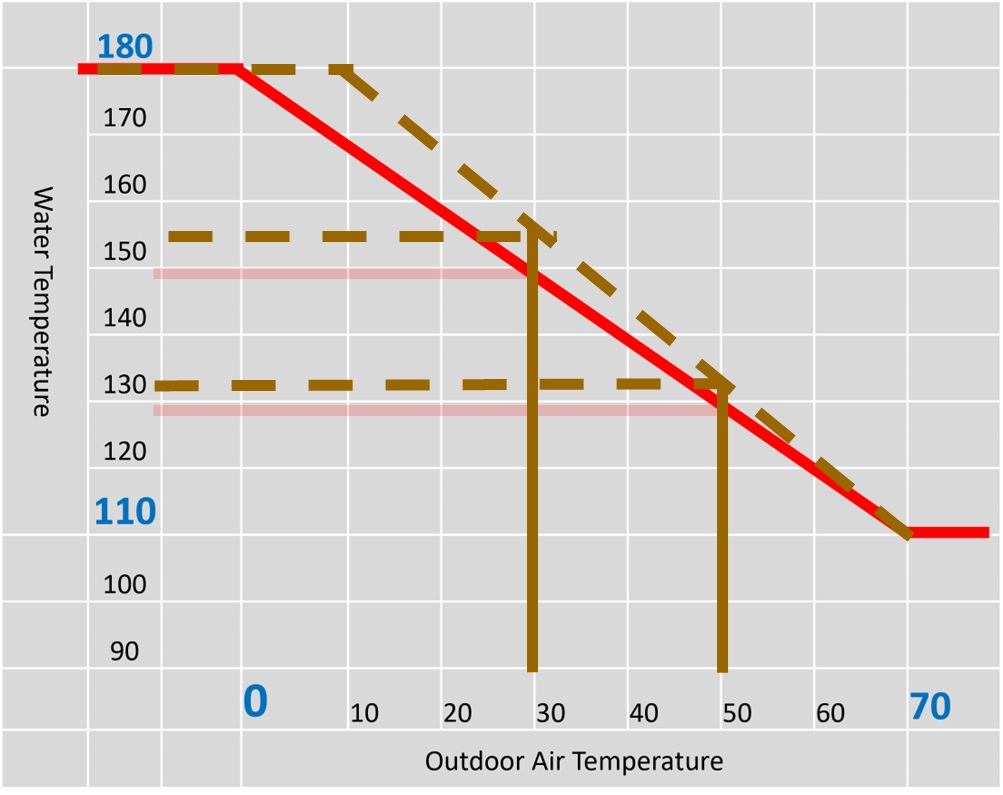
1. Low Outdoor Air Temperature - When the outdoor temperature starts getting colder, say 7f and the boiler runs cycles on and off but the thermostat does not satisfy. The water is not hot enough to maximize the btu output of the radiation so it can't supply enough heat to the house. If we raise the Low Outdoor Temperature from 0f to +10F. The maximum water temperature will not be 180F at +10F instead of 0F.
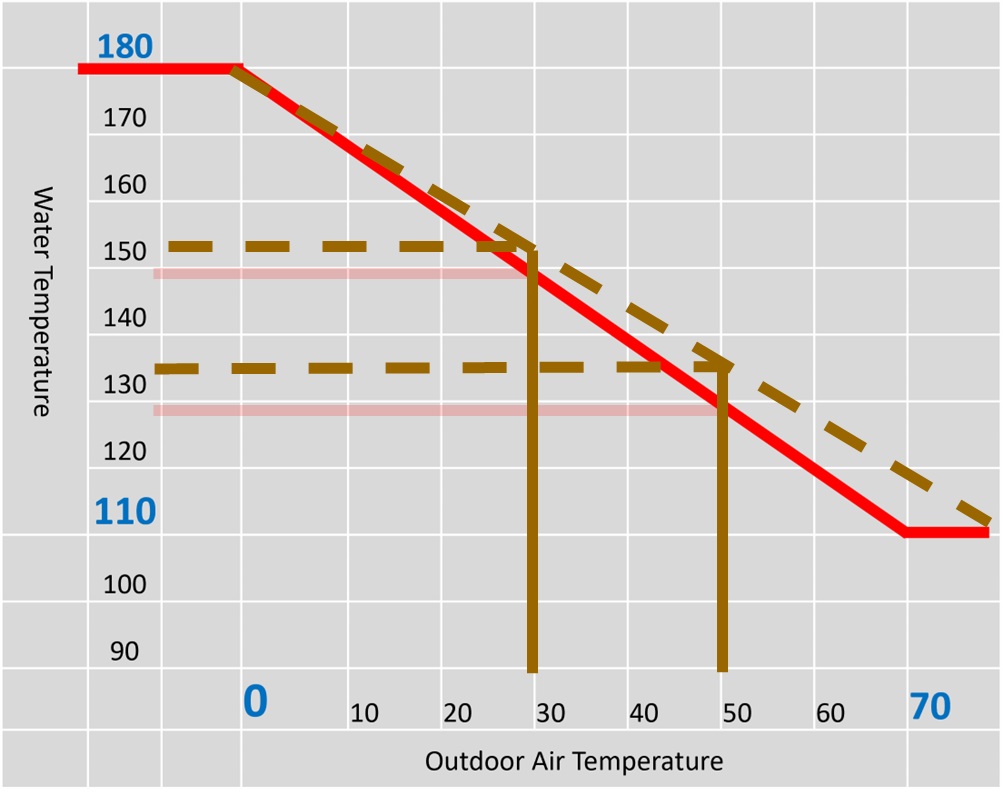
2. High Outdoor Air Temperature - If the home doesn't heat well during the shoulder season, (warmer days) but seems to heat well when it starts getting colder change this parameter to make the water temperature higher to raise the system water temperature on the warmer days.
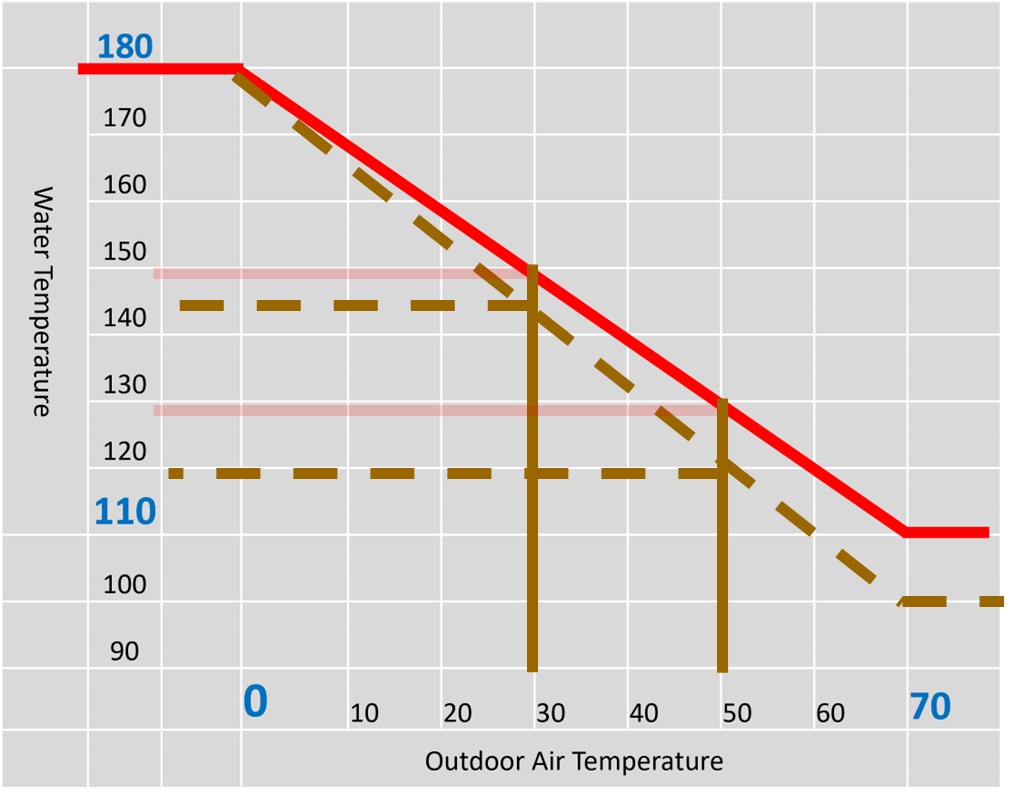
3. Low Boiler Water Temperature - There are times you may need to change the low boiler water temperature. It may need turned up if there is not enough radiation in the home to meet the heat loss at warmer outdoor temperature. It may also have to be turned down if they home has radiant heat or cast iron radiation. Yes, cast iron radiation is considered low temperature heating with one exception, if the system was converted from a steam system to a hot water system. When converted the radiation output could loose up to 40% of it's output.
4. Lower High Boiler Water Temperature - If you have radiant heat which works at much lower water temperature you will need to lower the high boiler water temperature. Running too high of a water temperature in the heating system may damage the tubing. If the tubing is in concrete or a light weight pour extreme temperatures may crack the concrete or pour over. If you have a cast iron radiator system you may want to lower the high boiler water temperature. Do the calculation after you do the heat loss to determine the maximum water temperature needed. Making it go higher than needed is a waste of energy.
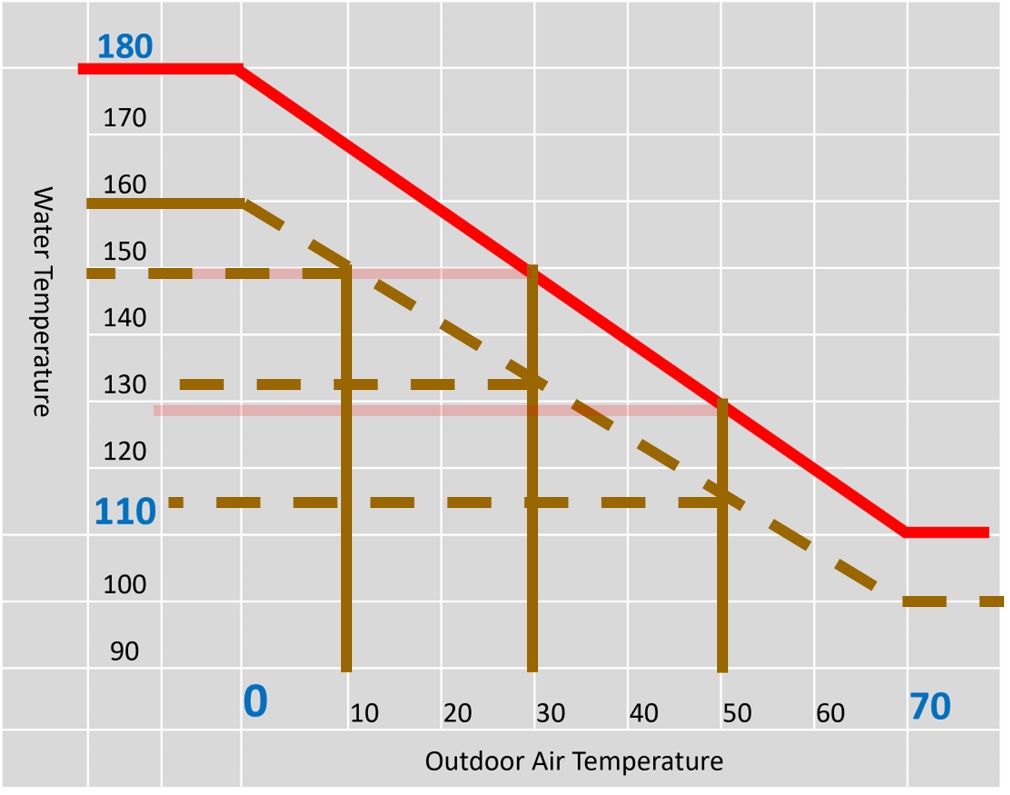
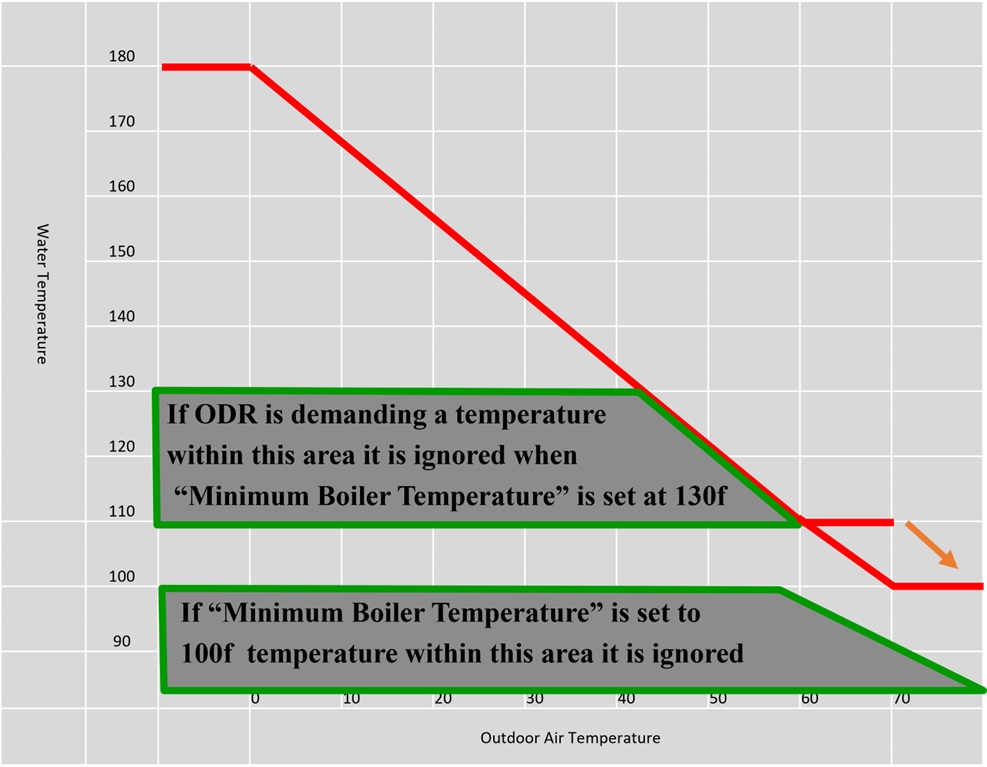
5. Minimum Boiler Temperature - While not all boiler manufacturers have this option it may or will need to be adjusted dependent on the system the boiler is attached to. If you lowered the low boiler water temperature this setting will need to be lowered. The reason is most manufacturer's that offers this parameter uses a default temperature of 130F. If the maximum temperature your heating system needs due to a radiant system installed in slab is 120f the boiler will fire to 130F since that is the default setting. Drop this to meet the low boiler water temperature for best results.
If you have a cast iron radiator system that is not a steam conversion reset the minimum water temperature to 100F and the low boiler water temperature to 90F.
If you have a hot water baseboard system set it to 120F or leave it at 130F. The boiler will send out no water less than the minimum water temperature even if the control says the water temperature should be less than the minimum water temperature parameter.
Disclaimer: The information found on this website is for informational purposes only. All preventive maintenance, service, installations should be reviewed on a per job situation. Any work performed on your heating system should be performed by qualified and experienced personnel only. Comfort-Calc or its personnel accepts no responsibility for improper information, application, damage to property or bodily injury from applied information found on this website as it should be reviewed by a professional.