
Information about Monoflo Systems
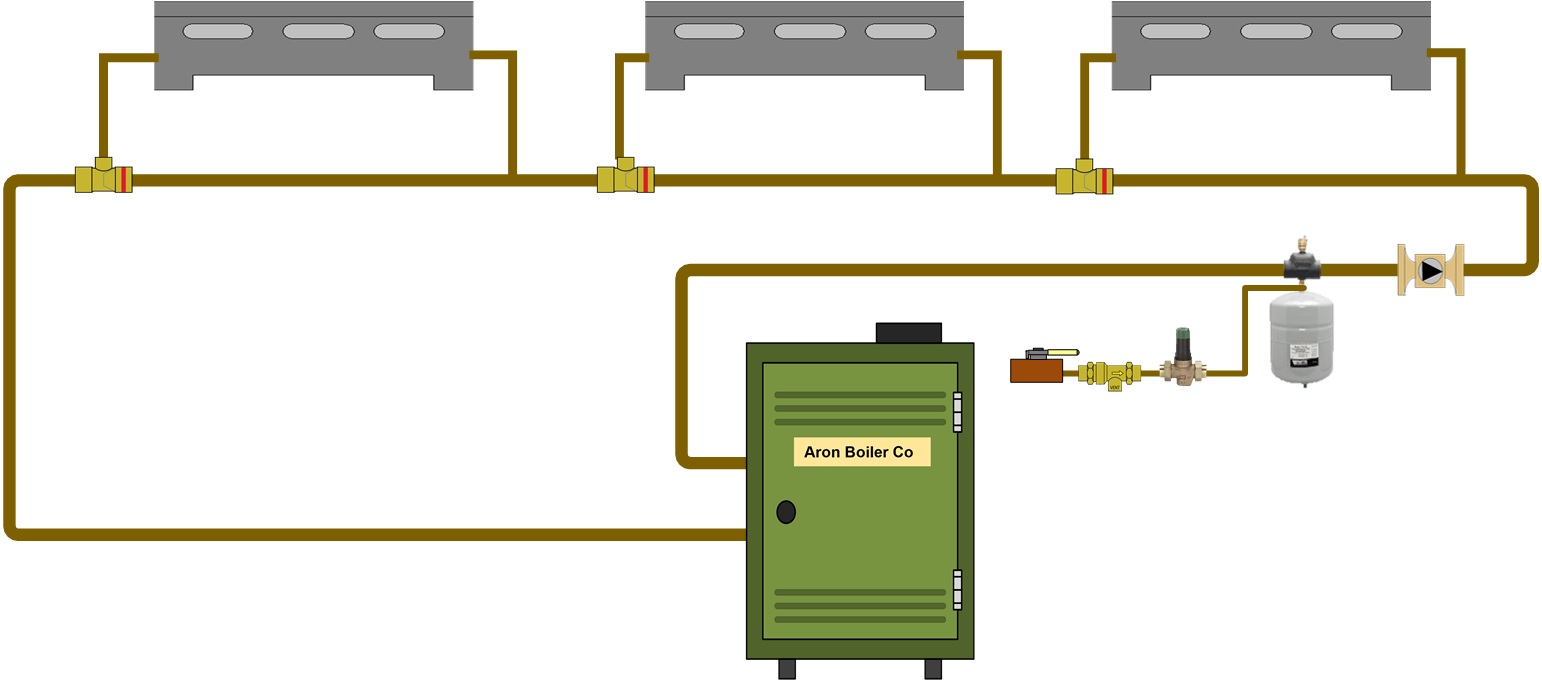
Monoflo systems are unique systems because they have a single pipe around the basement and both the radiation supply and return pipe come off that same pipe. Water always wants to take the path of least resistance when flowing. If you tried to install a monoflo system without creating pressure differences with specially designed tees the water would not flow to the radiation, it would just flow around the main pipe in the basement. All heat flow is dependent on pressure differences whether it be warm air, hot water, or steam. High pressure goes to low pressure all the time, you cannot change that. As long as we create enough of a pressure change it all works fine. On the other hand, we do not create enough of a pressure change it does not work so well.
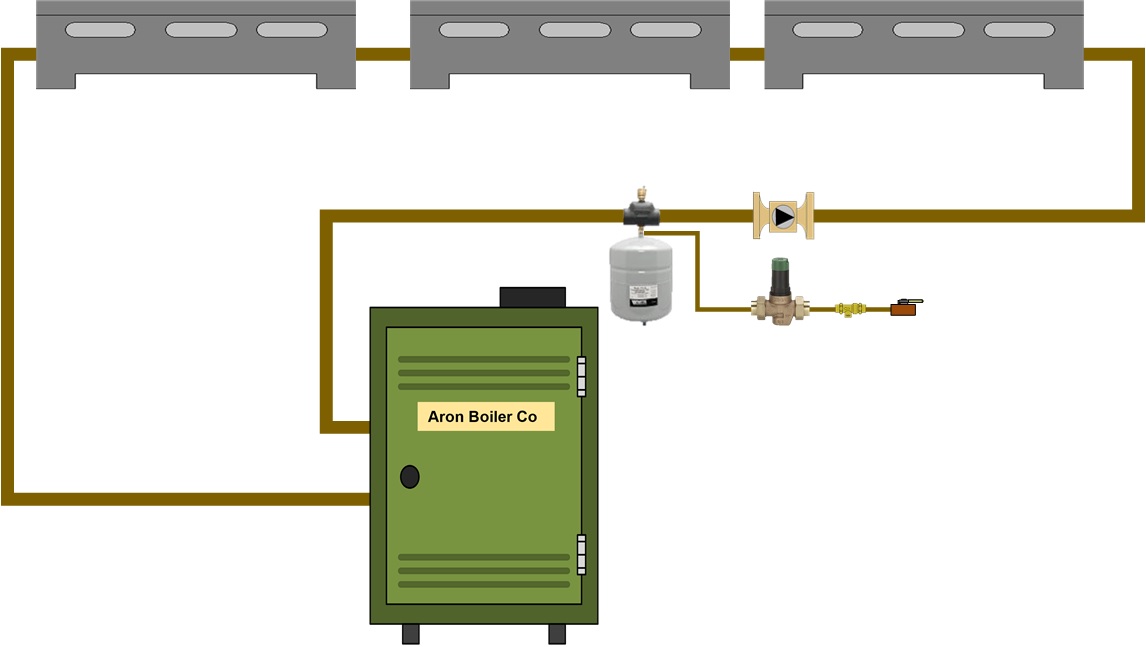
The invention of the monoflo tee is what makes this system work. It creates a pressure change large enough to make the water flow up or down into the radiation and back into the main loop pipe around the basement. You may ask what is the main difference between a series loop which is one pipe around the basement and a monoflo or diverter tee system. A series loop will start at the boiler and go through all the radiation. It does not have tees off the main loop to each section of radiation, it is a continuous loop from one radiator to the next. The monoflo system has the tees to isolate each section of radiation. A series loop system if you want to shut off a section of baseboard with a valve you shut flow to the whole loop. The monoflo system if you shut down a valve on a section of baseboard the rest of the system works. The flow is affected slightly but it would still work just not as efficiently as the flow in the complete system depends on the flow through the monoflo tee and the radiation.
Series Loop
Monoflo system
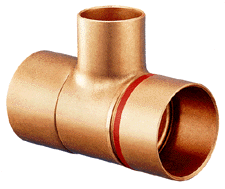
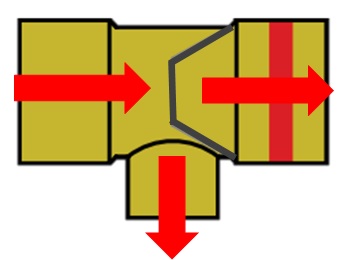
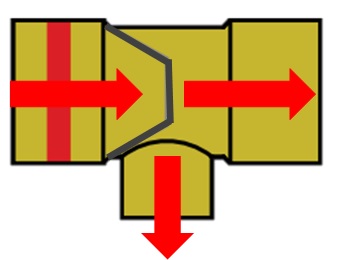
The monoflo tee is designed to create a pressure difference between the supply tee and the return tee. Let's look at the monoflo tee design. They will have an arrow or a red ring to show direction of flow.
B&G Monoflo Tee
Taco Venturi Tee Drawing
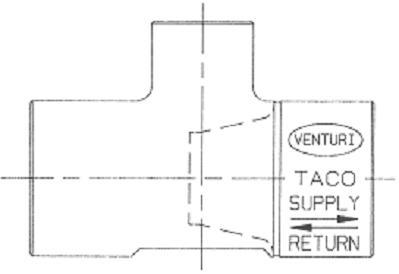
Monoflo Tee Flow
The way this system works is as the water flows through the pipe it will pass the first tee as the straight pipe is the path of least resistance. When the water hits the venturi in the second tee the amount of water that passes through is reduced but the velocity is increased. The water that is being backed up waiting to pass through the venturi is building pressure due to circulator still pumping. As the pressure builds it will increase until the pressure at the first tee is great enough to overcome the pressure drop through the radiation connected to the set of tees. The water will circulate through the radiation and the gpm flowing through the radiation is also increased by the venturi effect. As the velocity increases through the venturi, it will create a suction at the top of the venturi tee which added to the pressure buildup on the supply tee will flow the proper amount of water.
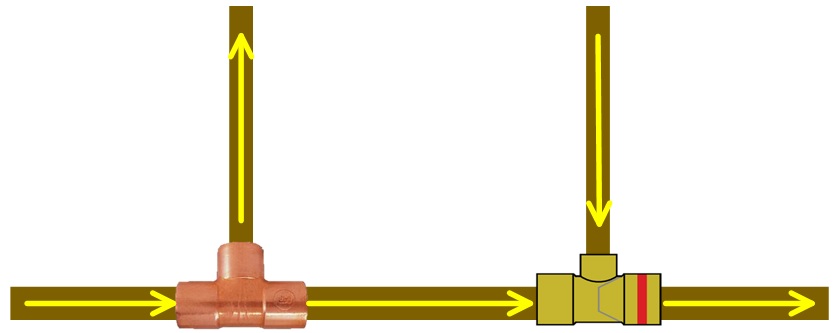
The spacing of the tees is critical to get the pressure high enough to make it work. The minimum spacing is 18" between the tees. It is a general rule that the length of the radiation connected to the tees should be the spacing between the tees. For example, if you are connecting a 6' piece of baseboard the tees should be 6' apart. The tees connected to a single piece of radiation is a set. There should never be any tees for other radiation between another set of tees.
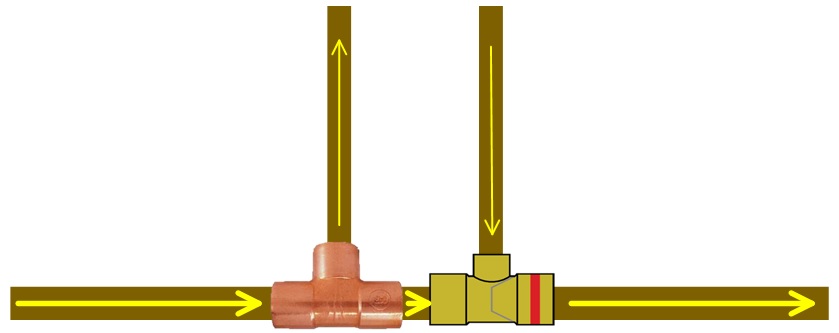
Radiation Below the Main
When you have radiation below the main piping pay special attention to the piping. Since hot water is hard to push down you will need two monoflo tees. The supply tee will be installed backward. The arrow will point against the water flow. The flow will enter the tee toward the small side of the venturi acting as a scoop and forcing the water down. The return tee will be installed the same as all the other tees on the return side. Any pipes going up to radiation and rated less than 15,000 btu's you can use 1/2" pipe. On radiation below the main pipe never use less than 3/4" pipe even if the radiation is less than 15,000 btu's.
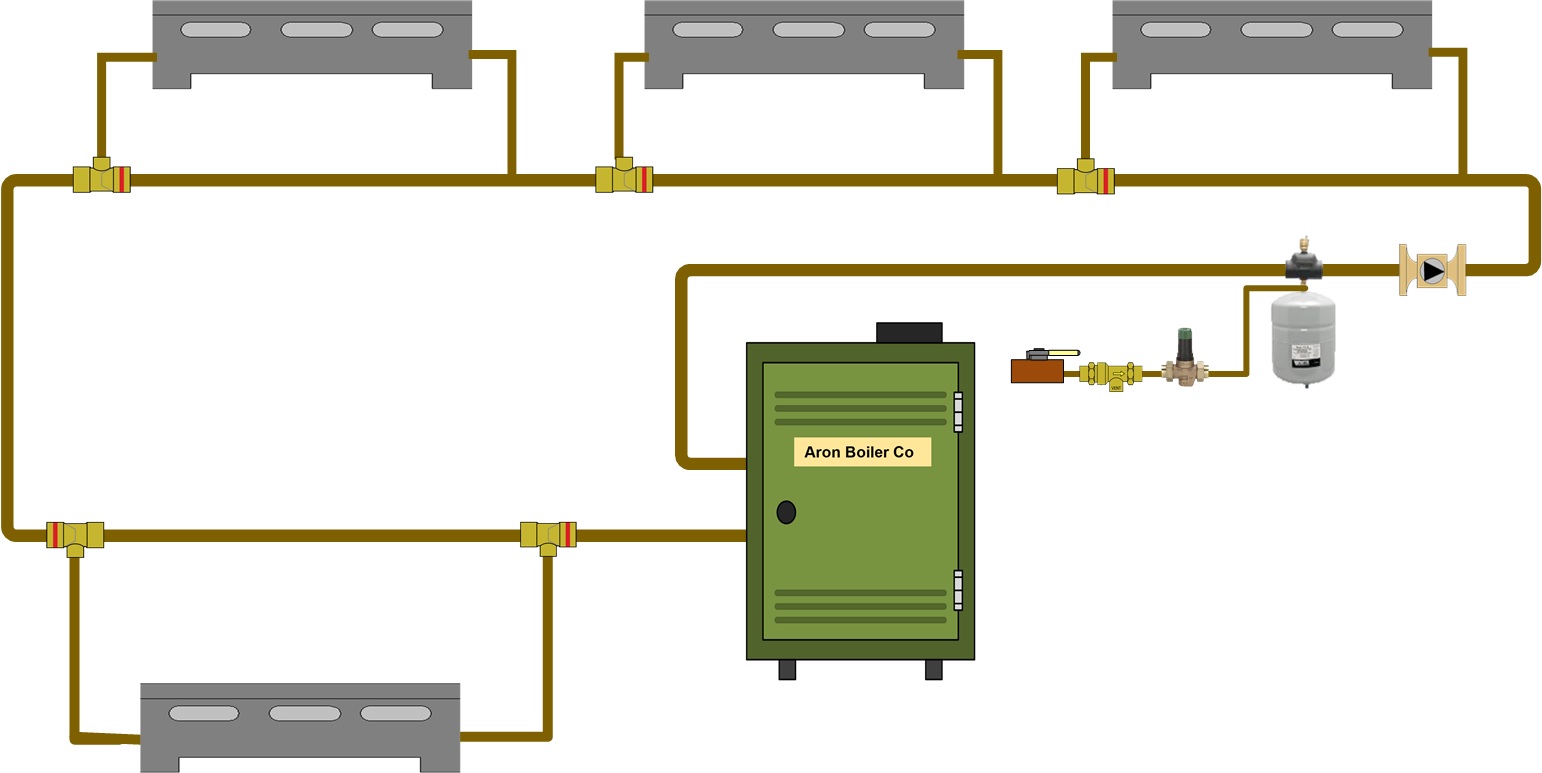
Flow as per drawing above
Adding Kickspace Heater Using 2 Tees
Another time you would want to use two tees installed as shown above but in the up vertical application would be to get proper flow through high resistance radiation. Some of the newer radiation on the market is of higher resistance or a kick space heater which mounts under cabinets normally in kitchens and bathrooms.
Removing Radiation From Monoflo Systems
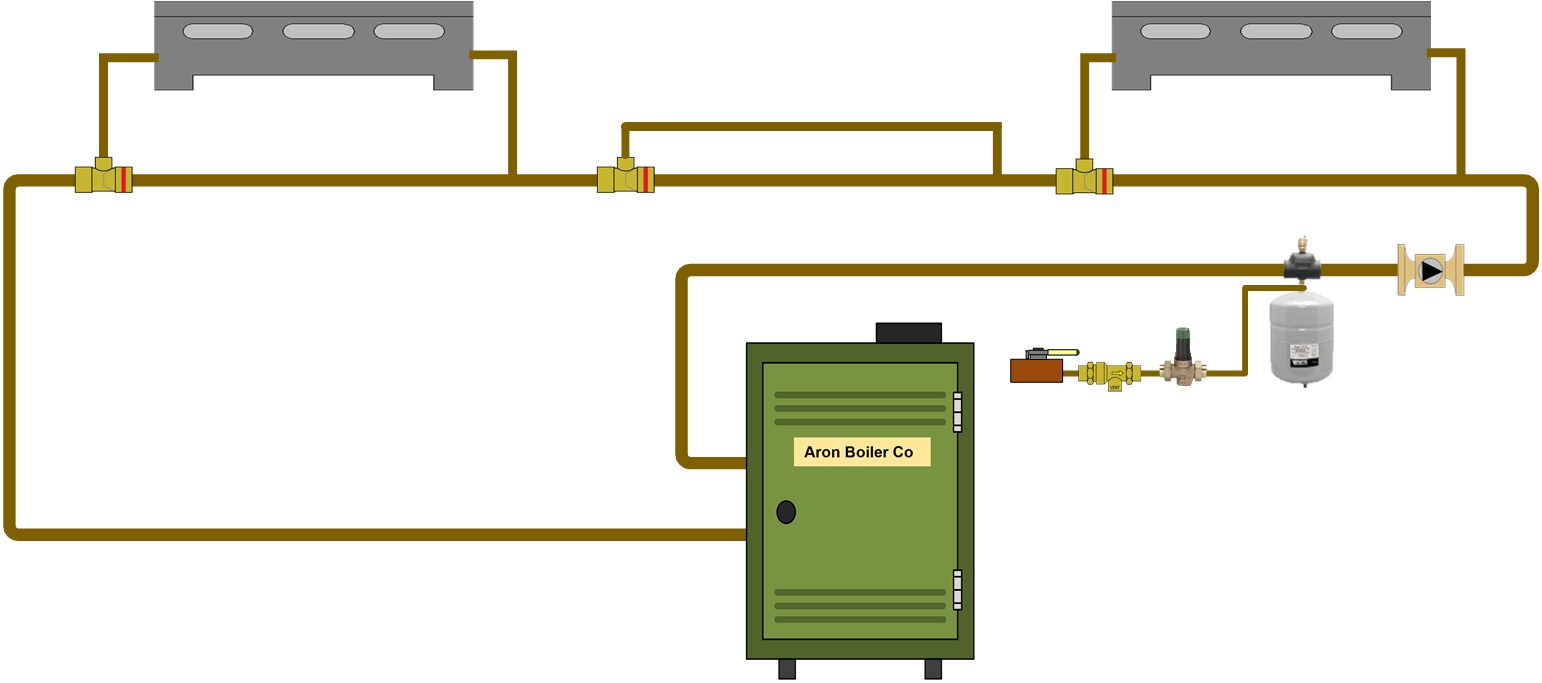
An issue we can run into with these systems is when we want to remove a section of radiation. We cannot just remove a section of radiation and cap the lines. We must either remove the tees and install a section of pipe the same size as the main pipe or cut off the vertical risers and connect them together. If we do not remove the tees or connect the riser it will affect the flow in all the radiation in the system. Remember as we reduce system flow we reduce the heat output from the system.
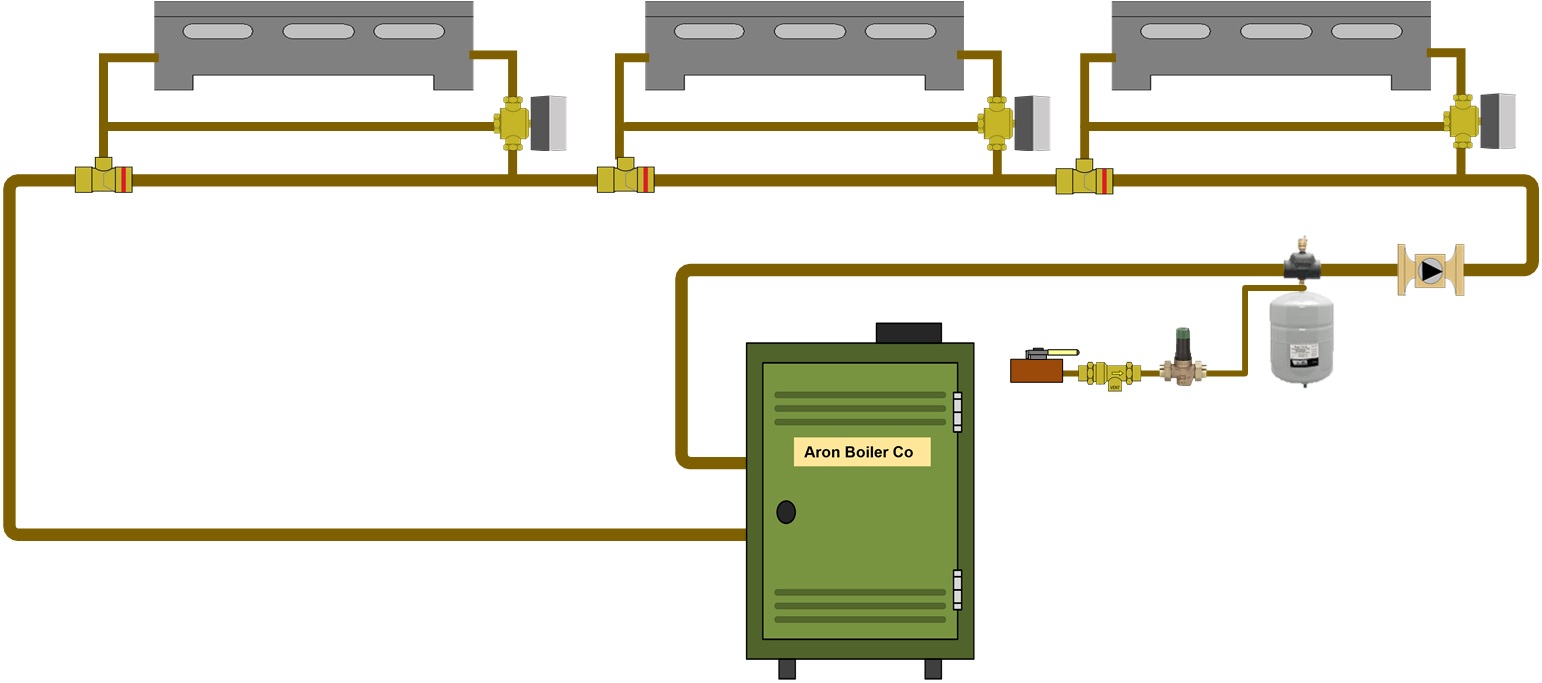
Zone Valves or TRV on Monoflo Systems
I am not a proponent of micro-zoning but there are people who will want to zone the radiation on a monoflo system. If you do you will want to use 3-way zone valves on the radiation which gives us a bypass around the radiation when the zone valve is closed. This serves the same purpose as the pipe added when a piece of radiation is removed as in the above drawing
There are times when the system is drained for some type of service or a boiler replacement, and one or more pieces of radiation do not heat when refilled and bled.
This issue is discussed in the link below.
Disclaimer: The information found on this
website is for informational purposes only. All preventive maintenance, service, installations should be reviewed on a per job situation. Any work performed on your heating system should be performed by qualified and experienced personnel only. Comfort-Calc or its personnel accepts no responsibility for improper information, application, damage to property or bodily injury from applied information found on this website as it should be reviewed by a professional.