
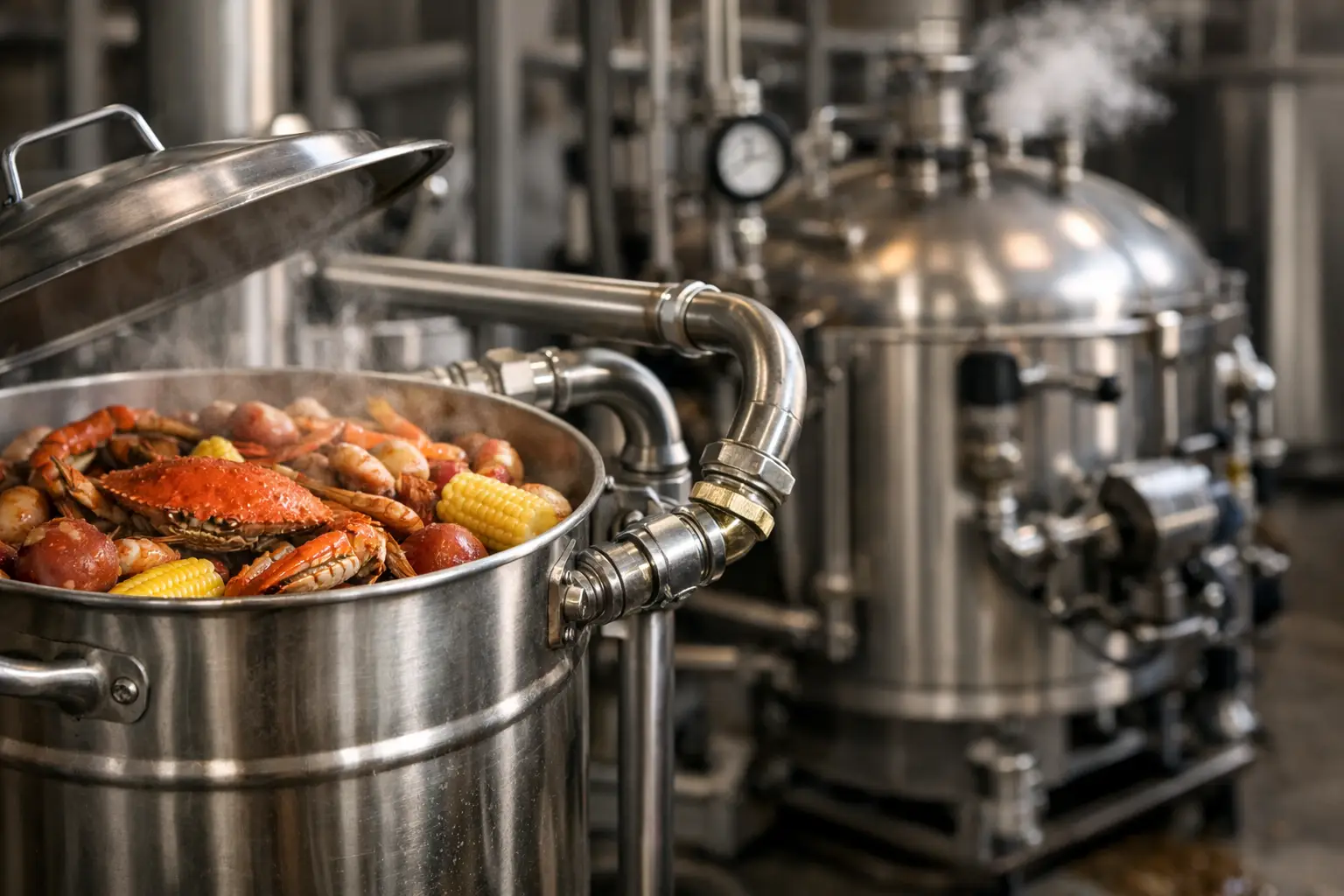
Piping Crab Steam Pots To A Steam Boiler
A steam line that looks acceptable on a heating job can become a dangerous condensate launcher when connected to cooking equipment.
A residential space-heating steam boiler should not be casually repurposed to cook food. A crab pot installation belongs in the commercial-equipment world, where the steam source, water treatment, materials, controls, relief protection, drainage, and sanitation requirements have been evaluated as a complete system.
Start With the Steam Pot Load and Listing
Do not size the boiler or steam main by the connection size on the crab pot. A 3/4-inch steam inlet does not tell you the appliance's actual steam consumption. Obtain the manufacturer's required steam pressure, steam capacity in pounds per hour, inlet piping requirements, and condensate connection details.
For a rough capacity check, one pound of low-pressure steam releases approximately 970 Btu as it condenses. If a pot requires 100 pounds of steam per hour during recovery, the steam source must deliver roughly 97,000 Btu per hour to that load before allowing for piping losses and other connected equipment. The boiler also needs enough reserve to recover after baskets of cold crab are loaded.
Most cooking equipment operates at low pressure, but "low pressure" is not a design value. Some pots are intended for near-atmospheric steam, while others require a regulated pressure at the appliance. Select the pressure from the equipment data, not from the boiler's maximum allowable working pressure. A pressure-reducing valve may be necessary when a common steam header serves equipment with different pressure requirements.
Piping Crab Steam Pots: Keep the Steam Dry
Wet steam slows cooking, wastes fuel, and creates water hammer. The basic piping objective is simple: carry dry steam to the pot and remove condensate before it can be picked up by high-velocity steam.
Take steam from the top of a properly sized header, not from a location likely to carry boiler water. On a dedicated culinary steam generator, follow the manufacturer's outlet arrangement exactly. If the boiler requires a riser, header, equalizer, separator, or specific outlet size, those details are part of producing usable steam, not optional near-boiler decoration.
Pitch horizontal steam piping so condensate has a defined path to a drip point or return. Avoid a line that rises, falls, and rises again without drainage. Each low point can collect water, and that water will eventually be driven down the line by steam velocity. Long runs, changes in direction, control valves, and equipment branches commonly need drip legs and properly selected steam traps.
Pipe supports matter. Steam piping expands significantly when it heats. Unsupported pipe can lose its pitch, pull on a valve or appliance connection, and create a new water pocket after the job is complete. Provide support, allowance for expansion, and accessible unions or flanges where future service is expected.
Condensate Is Not an Afterthought
A steam trap is selected for more than pipe size. It must pass the expected condensate load at the available pressure differential while preventing live steam from entering the return. Undersized traps back up condensate into the steam main. Oversized or poorly applied traps can cycle badly and make diagnosis harder.
The condensate strategy for food equipment deserves special attention. Do not assume condensate from a crab steam pot can return to a boiler feed system. Food particles, grease, cleaning chemicals, and sanitary concerns can make return unsuitable. Many installations discharge equipment condensate through an approved indirect waste arrangement rather than sending it back to the boiler. Follow the appliance instructions, local plumbing requirements, and the authority having jurisdiction.
Install strainers, isolation valves, test connections, and trap unions where they can be serviced. A trap hidden above a hard lid may technically exist, but it will not be maintained. That is how a small drainage problem becomes a recurring hammer complaint.
Steam Quality and Food Safety Are Separate Requirements
Dry steam is not automatically culinary steam. Boiler water may contain treatment chemicals, corrosion products, or contaminants that are acceptable for a closed heating system but unacceptable where steam can contact food or food-contact surfaces. The steam source, treatment program, piping materials, and appliance must be appropriate for culinary use.
Do not improvise a direct-steam connection from a building heating boiler. Use listed commercial equipment or a properly engineered steam system intended for food service. Verify relief-valve discharge, low-water cutoff protection, water makeup, backflow protection, combustion-air provisions where applicable, and emergency shutoff requirements before commissioning.
During startup, open the steam slowly, confirm each drip point is draining, and listen for hammer before placing the pot in production. A quiet steam line with stable pressure and a dry appliance inlet is not a luxury - it is evidence that the piping is doing its job.
For more information on piping steam boilers to crab pots follow this link.